.svg)
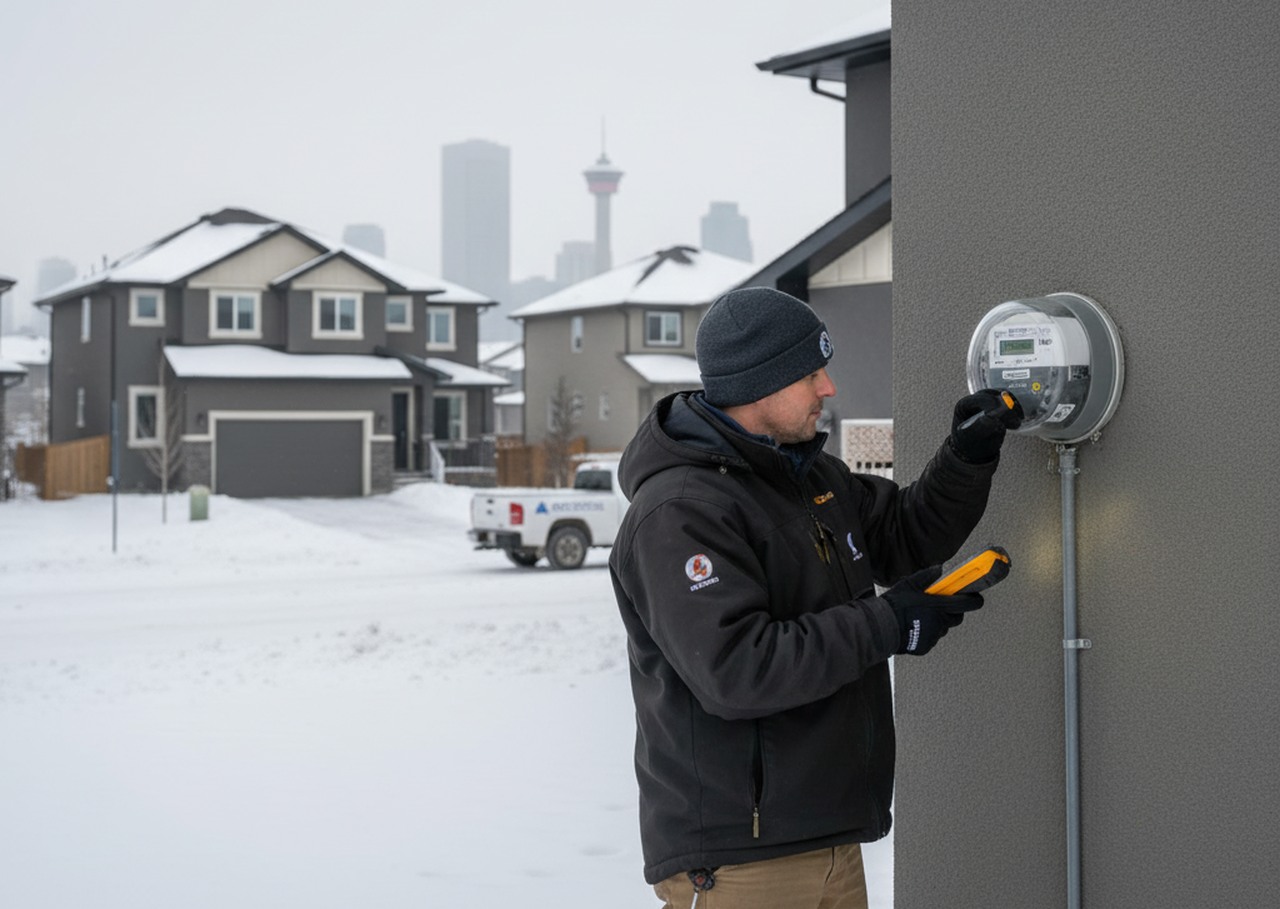
Summertime in Calgary, AB, is warm and humid. You’ll rely on your air conditioner for relief from the sweltering heat and humidity. If you’ve noticed any issues with your electrical system, electricity bills, or your air conditioner, you might be wondering how many watts of electricity the air conditioner uses. This is also important information to know if you need to replace your air conditioning system. Keep reading to learn how many watts your air conditioner uses, how to track the number of watts your cooling system requires on a particular day and what to do if your air conditioner’s watt usage suddenly increases.
WHAT ARE WATTS?
Watts are a measure of how much power a device produces or consumes over a period. It’s important to know how many watts your air conditioner uses because it will help you determine how efficient the unit is, how much you’re paying to operate the cooling system and whether you’d be better off replacing an old, inefficient unit and replacing it with a new, high-efficiency one.
WHAT DO WATTS MEAN IN AIR CONDITIONING?
In air conditioning, watts are a measure of how much power the system uses to cool your home for a specific period, such as one hour. Many components of the air conditioner need power. The indoor and outdoor units have fans and motors that require electricity. The compressor, which changes the state of the chemical refrigerant, also uses power. In general, one ton of cooling power requires about 1,000 watts.
WATTS USED IN A WINDOW AIR CONDITIONER
Window air conditioners are designed to cool and dehumidify a small space. A window air conditioner sized for a 300 to 400 square foot bedroom usually uses about 500 watts of power. Medium-size window air conditioners, such as those that would cool a studio or one-bedroom apartment, use between 900 and 1,100 watts of power.
WATTS USED BY CENTRAL AIR CONDITIONING WHILE COOLING
When a central air conditioning system is in cooling mode, it uses a lot of power. In a typical 2,000 square foot home with a central air conditioning system that’s properly sized, the air conditioner will use 3,500 watts of power. Your air conditioner may use more watts if you have the thermostat set to a cool temperature. If you have a ductless air conditioning system, it will use 2,500 to 3,000 watts of power. A zoned cooling system with up to four indoor units and one outdoor unit will use 500 to 900 watts per zone that are in use. The manufacturer of each air conditioning system includes details about how many watts it uses per hour under normal operating conditions.
WATT USAGE IN A CENTRAL AIR CONDITIONING SYSTEM IN FAN-ONLY MODE
When a central air conditioner is turned on, it can be set to the fan-only mode. When the system is in fan-only mode, it doesn’t cool. It does circulate the air through the air handler and your home’s ducts. This keeps your air clean, but it doesn’t remove humidity. Many people set up this function overnight. When in the fan-only mode, central air conditioners use about 750 watts of power.
HOW TO TRACK THE WATT USAGE OF YOUR AIR CONDITIONER
The easiest way to track the watt usage of your air conditioner is with a smart thermostat. Most newer air conditioners are compatible with one or more models of smart thermostats. The thermostat communicates with your air conditioner and to an app on your phone. You can track the watt usage in real-time. By monitoring spikes, you can determine if your air conditioner is using more watts than expected. Smart home automation systems are another way to track the watt usage of your air conditioner. These systems integrate your heating and air conditioning, lights, audio, refrigerator, and more into one management system.
SIGNS THAT YOUR ELECTRICAL BOX ISN’T PROVIDING ENOUGH WATTS TO POWER THE AC
Older homes and homes that haven’t been updated in several decades may have circuit breaker boxes that don’t deliver enough watts to the home. If your air conditioner clicks on, but it doesn’t start all the way up, it might not be getting enough watts to power the motor and fan. If the circuit breaker for the AC trips, this is a sign that your air conditioner is drawing too many watts. You’ll need an AC repair if the breaker to the air conditioner trips more than once per month.
WHY AIR CONDITIONER WATT USAGE MAY SUDDENLY INCREASE
Air conditioners may use more watts as they age. That’s because the aging process causes them to lose efficiency. Keeping up with regular maintenance minimizes these efficiency losses. Dirty ducts may cause your air conditioner to work harder. If it’s been more than five years since your air ducts were cleaned, consider scheduling this service. Dirty filters and coils may lead to higher watt usage in your cooling system. Be sure to check and replace the filter each month. Only qualified heating, ventilation, and air conditioning technicians should clean the system’s coils. In some cases, a failing part will cause your air conditioner to use more watts of power. A problem with the motor, contactors, or capacitor may lead to higher electricity use in your cooling system. Your air conditioner will also use more watts if there are more people in your home or if you’re running many appliances and electronic devices.
WHAT TO DO IF YOUR AIR CONDITIONER STARTS USING MORE WATTAGE
Air conditioners use the most watts at the start of the cooling cycle. That’s because the fan and motor must get going, and this takes a lot of power. Once they’re moving, less electricity is required to complete the cooling cycle. If you’re actively monitoring your air conditioner and notice the watt usage spike at the start of a cooling cycle, this is normal. It should drop quickly. If it doesn’t fall, there are a few things you can check before calling for an air conditioning repair. If your air conditioner starts using more watts of power, check the air filter. A clogged air filter lowers AC efficiency and causes the system to work harder. Next, check for frozen coils. Ice on the coils may cause the unit to overwork itself, and its safety limit switch will eventually turn it off. Pay attention to the short cycling of the air conditioning system. Short cycling happens when the air conditioner finishes a cycle, turns off for a short time, then turns on again within one minute. Short-cycling air conditioners will use more watts. A qualified repair technician can determine why your system is short cycling.
Alberta Mountain Air Heating and Air Conditioning is the trusted provider of air conditioning installations in Calgary and the surrounding area. We also offer reliable heating installations and heating and air conditioning maintenance and repair. Our water heaters, indoor air quality solutions, UV lights, humidifiers, and dehumidifiers keep your home comfortable and healthy. For more details about how many watts an air conditioner uses, get in touch with us today.