Around 80% to 90% of all preventable furnace repair and service calls are caused by restricted airflow—and the primary culprit is a dirty or incorrect air filter.
So, understanding filters is essential for ongoing furnace performance and indoor air quality in your Calgary home.
In this guide to furnace filters for Alberta homes, we’ll help you:
What are Furnace Filters?
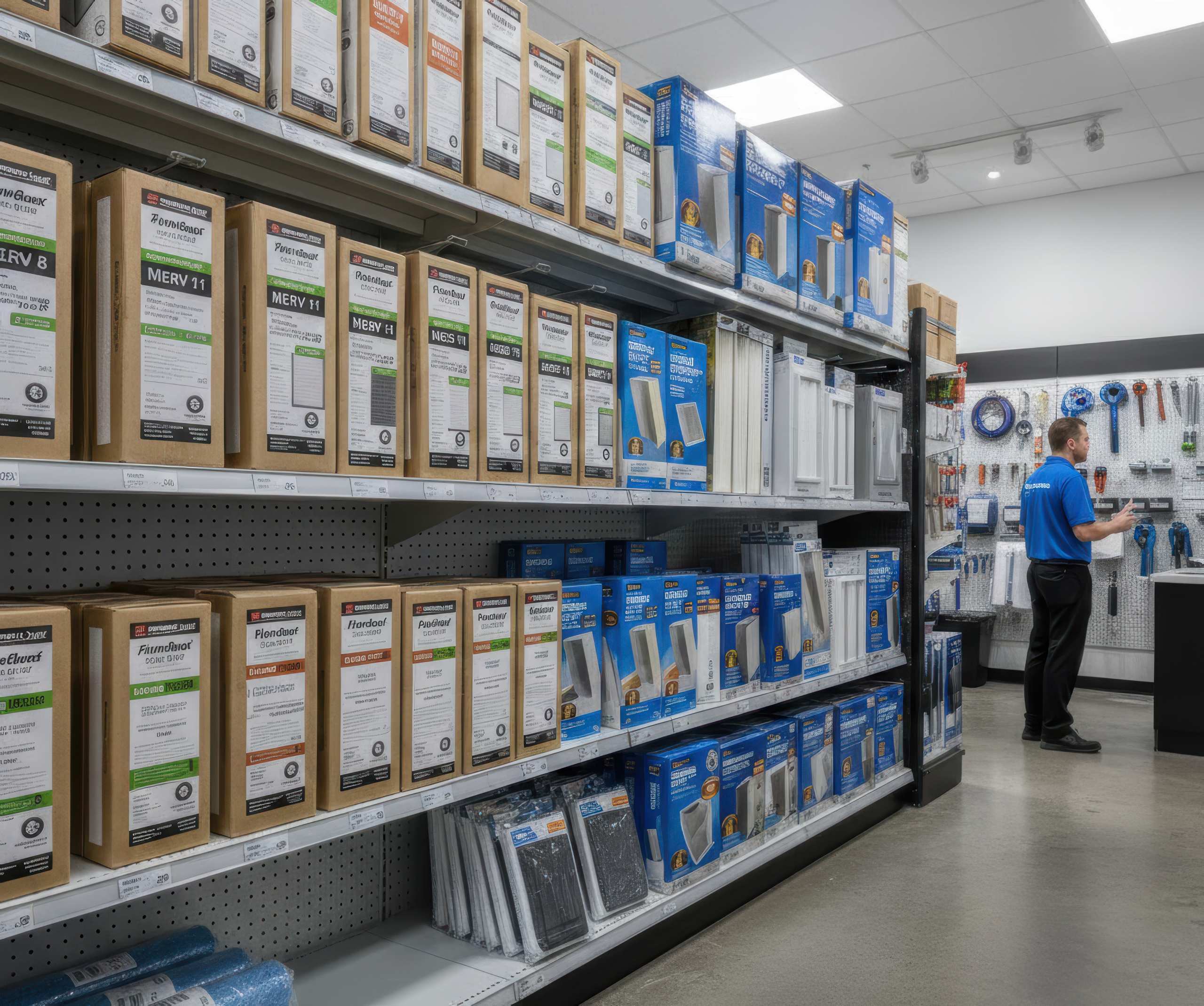
Almost all modern gas, electric, and oil furnaces have some form of air filter.
A clean filter acts as a barrier between contaminated air entering the HVAC system and the heated air that circulates through it.
Depending on the precise environment in which you live, dust, pet dander, smoke, and other particles will float around your home. Calgary homeowners try to completely seal their homes in winter, so indoor pollutants, allergens, dust, and pet dander can accumulate.
Many Alberta homeowners also face two additional challenges:
Contaminated air would enter your furnace, ductwork, and lungs if an HVAC filter weren’t there. So, filters play an essential role not only in heating your Alberta home, but also in your family’s health.
Not all filters are alike, though. Homeowners should understand how to select a filter type to achieve the best balance between furnace heating performance and indoor air quality.
So, let’s go deeper into it…
Furnace Filter Sizing
At the most basic level, with HVAC filters, we need to understand:
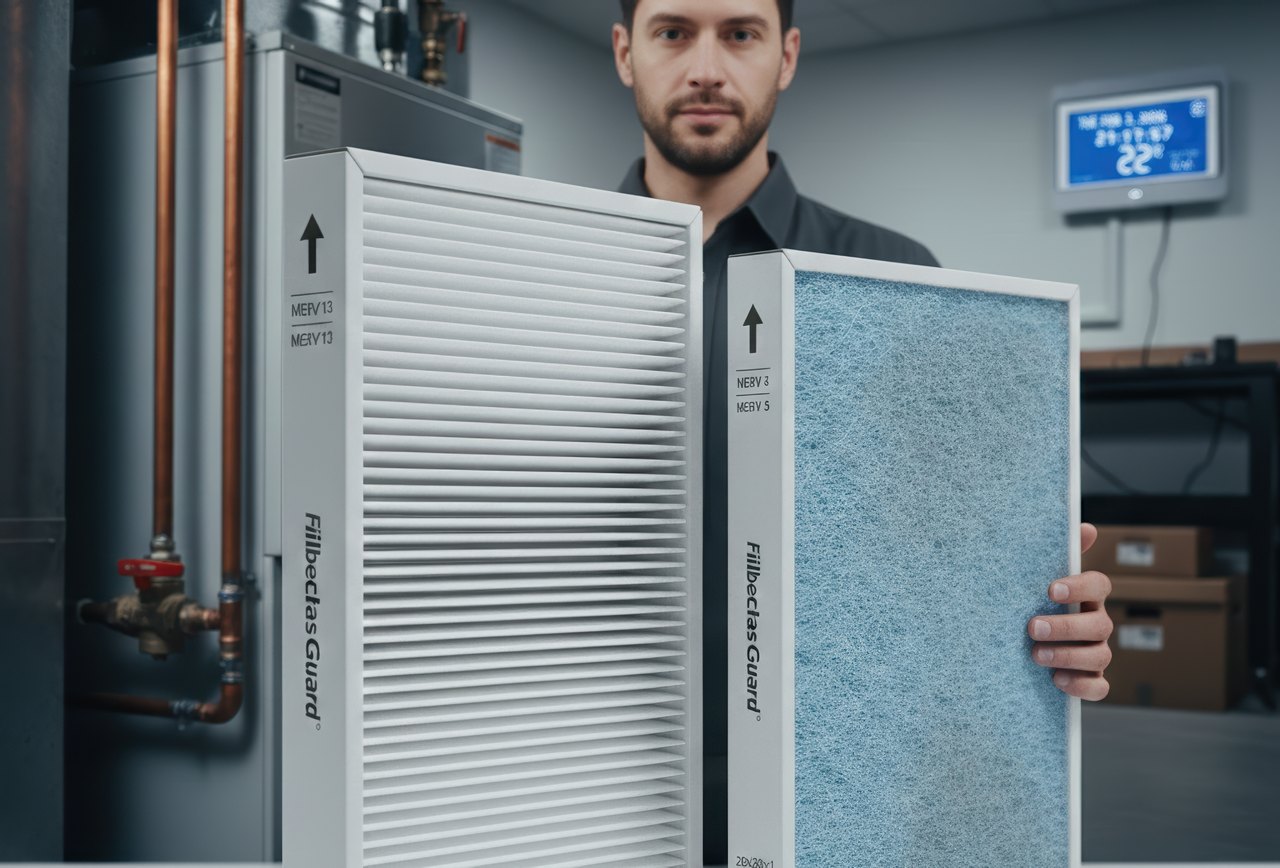
In the past, many furnace filters were washable. Nowadays, over 90 percent of filters used in Calgary heating systems are replaceable (disposable).
If you have a reusable filter, read this. They cost more upfront but you don’t need to buy replacements very often.
If not, you will need to purchase replacement filters of the appropriate size for your system. To identify the correct size, first remove the filter from its slot. This is usually in one of three places:
- An external slot in a thin metal rack (most common).
- In a slot inside the furnace (remove the bottom panel to locate it—mainly in older or compact furnaces).
- In a space inside the return grille (the largest air vent in your home—usually in a hallway or a central ceiling in apartments).
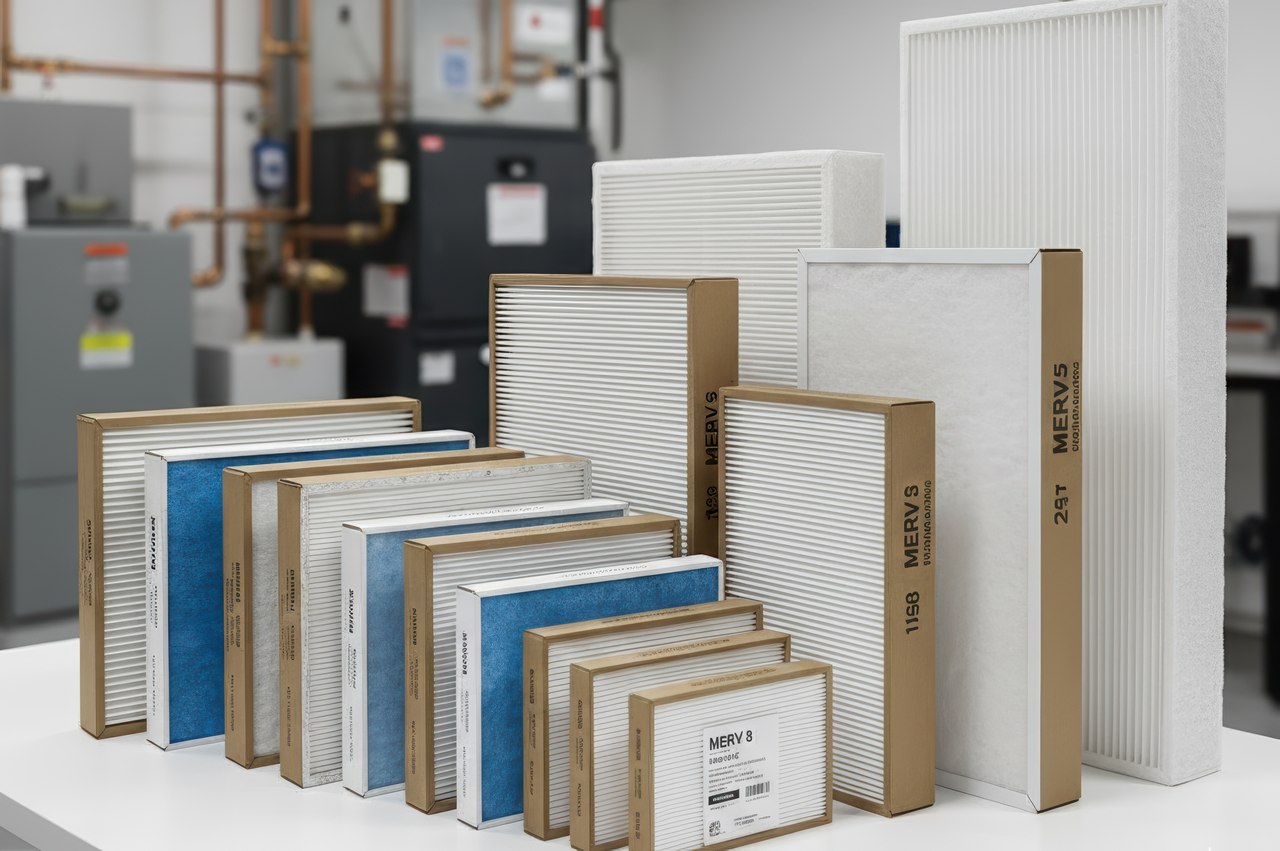
Once you remove the filter, make a note of the sizing on the side. It’s usually written something like this: 16x20x1. This means that your filter is:
Some of the most popular HVAC filter sizes in Calgary are:
If there is no filter in the furnace, use a measuring tape to establish the measurements or consult a licensed HVAC professional.
Filter Thickness Matters!
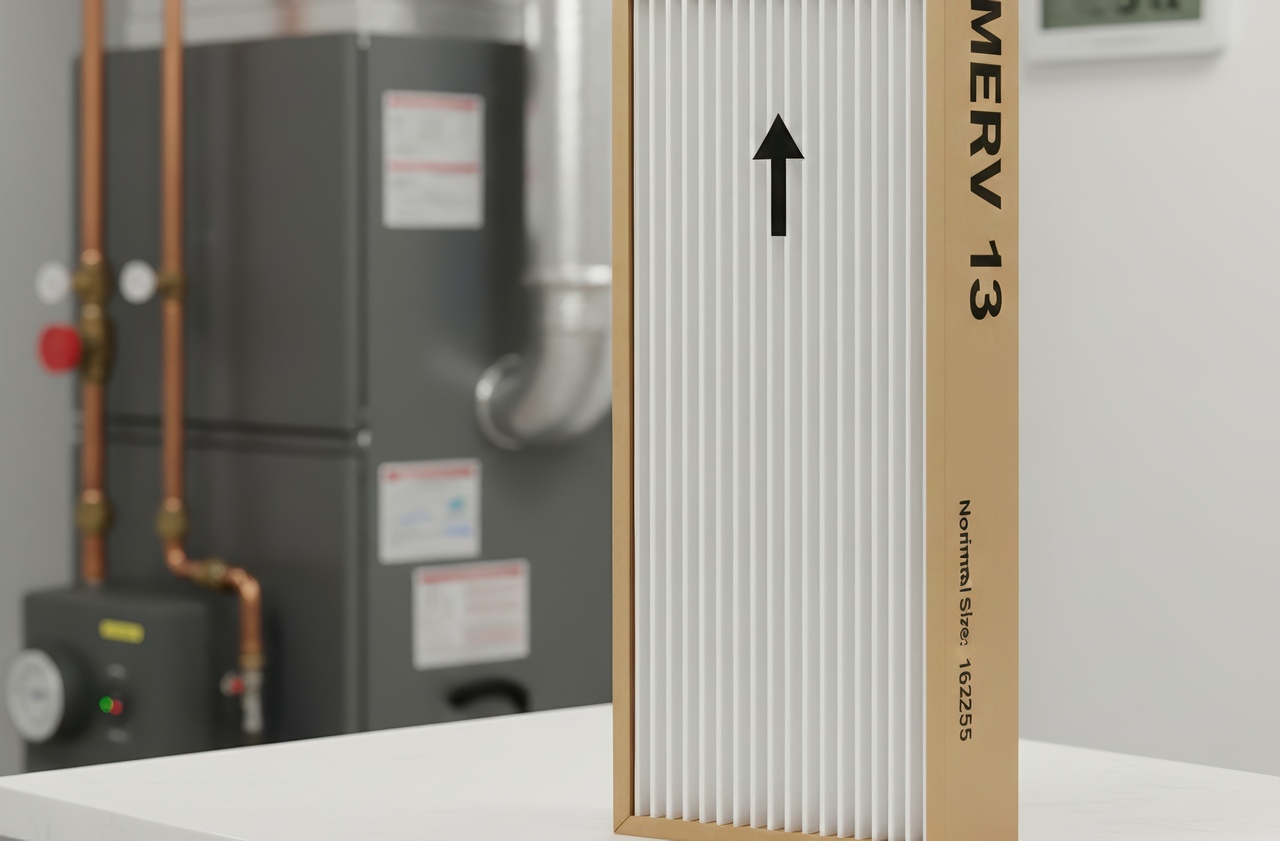
In many cases, the external slot in the metal rack is several inches wide. This will allow you to use filters that are 4- or 5-inches deep, providing much better filtration and airflow than the standard thin, one-inch filters.
The other advantage of these filters is that they need changing less often: every 6–9 months, compared to every 1–3 months for one-inch filters.
However, they do not work in all systems.
If in doubt, ask your furnace maintenance pro or consult the manufacturer’s manual.
MAKE THE RIGHT HEATING & COOLING DECISIONS…
For over two decades, Alberta Mountain Air has helped Calgarians solve heating and cooling problems and maintain ideal comfort levels. Get in touch online for a quote.
Furnace Filter MERV Ratings
The filtration capability (efficiency) of furnace filters is measured using a MERV (minimum efficiency reporting value) rating.
The MERV rating is measured on a scale of 1 to 20, indicating the size of particles that can be trapped in the filter.
The higher the rating, the smaller the particles it can trap. The highest-rated furnace filters are generally considered premium and cost more.
Here’s a breakdown of what to expect…
|
MERV RATING |
FILTRATION CAPACITY |
BEST FOR… |
|
MERV 1-4 |
Base level only.Catches only large particles like dust and carpet fibers. |
Window air conditioning units.Unsuitable for most HVAC systems, especially in Calgary’s dry, dusty & smoky environment. |
|
MERV 5-8 |
Filters from the higher end of the range trap particles from hairspray, cleaning products, pet dander, lint, and mold spores. |
Homes looking for basic filtration with no elevating factors.Not recommended for allergy sufferers. A minimum of 8 is best for most Calgary homes. |
|
MERV 9-13 |
Traps fine lead and coal dust and fumes from nebulizers and dehumidifiers. At the higher end of the range, can help limit the spread of airborne illness. |
Homes requiring pure air free of contaminants.Especially during wildfire season, located near construction sites/busy roads, or with elderly residents. May be used in hospitals but not in surgery rooms. |
|
MERV 14-16 |
98% protection from bacteria/viruses.Protection against cigarette smoke and automotive/insecticidal fumes. |
Hospital surgery rooms.Rarely used in homes.Consult an HVAC professional before installation. |
|
MERV 17-20 |
Highest quality filters.Filter everything from dust & debris to bacteria, combustion, radon & viruses. |
Rooms and spaces that contain radioactive or carcinogenic materials. |
Most homes in Calgary should look for a filter MERV rating of 8 minimum. These filters are compatible with most residential HVAC systems.
Many modern homes in Calgary (built in the last 10-15 years) can support 4- or 5-inch thick 11-13 MERV filters for extra-healthy indoor air quality and stronger general filtration.
WARNING: A higher MERV isn’t always better. A filter that is too restrictive acts like a clogged straw, making the furnace work twice as hard. This can lead to a cracked heat exchanger and expensive furnace repairs.
Furnace Filter Types
Besides size and filtration rating, it’s good to be across the main filter materials used in these components, so that you know what you’re dealing with.
Materials vary in quality (and costs), and your choice can affect filtration performance.
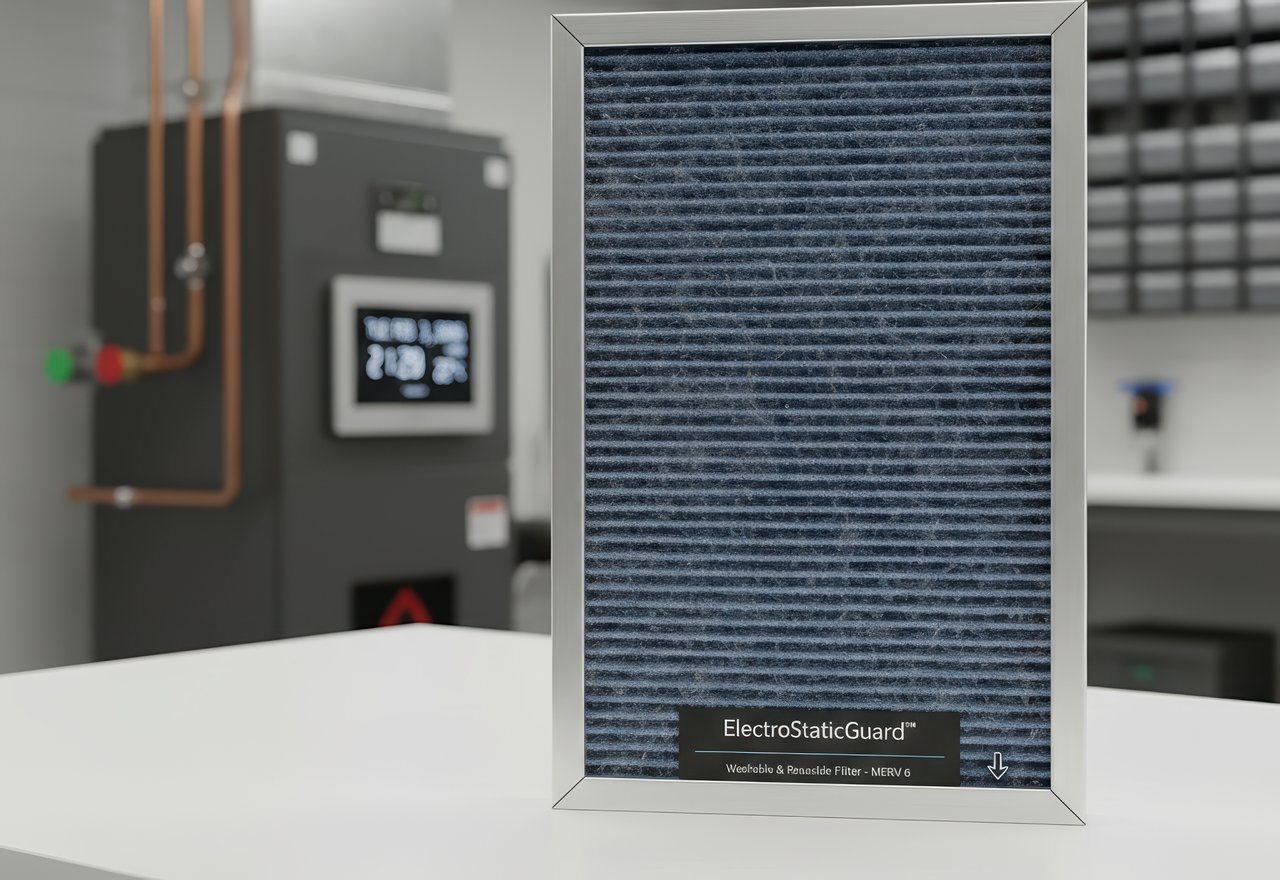
Electrostatic Filters
Electrostatic filters work a little like a balloon that you rub against your hair to create static electricity.
Fibreglass/Synthetic Filters
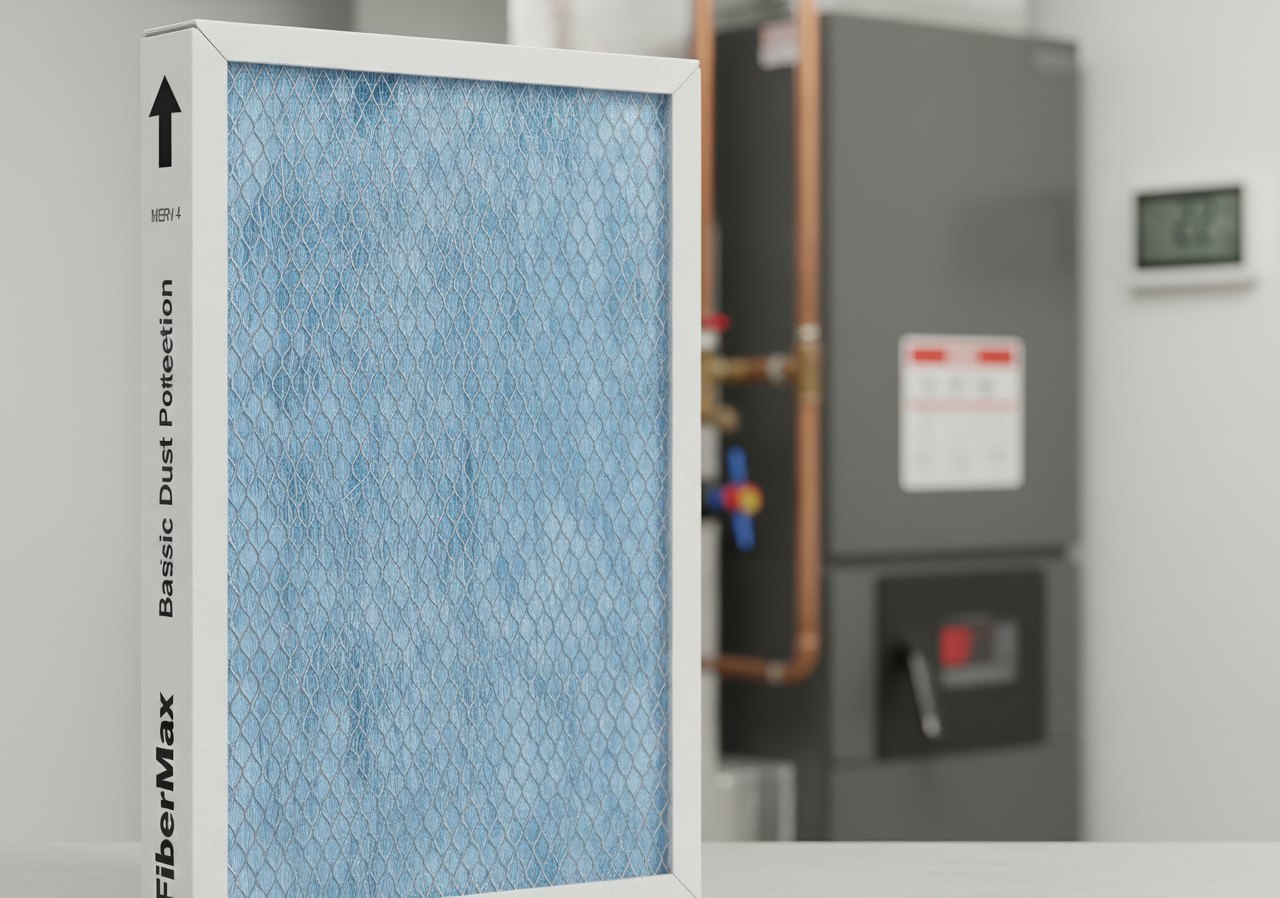
Fibreglass filters are the least expensive and most common filters used in Calgary homes. They are usually made of spun fibreglass and may be reinforced by a metal grate.
Polyester Filters
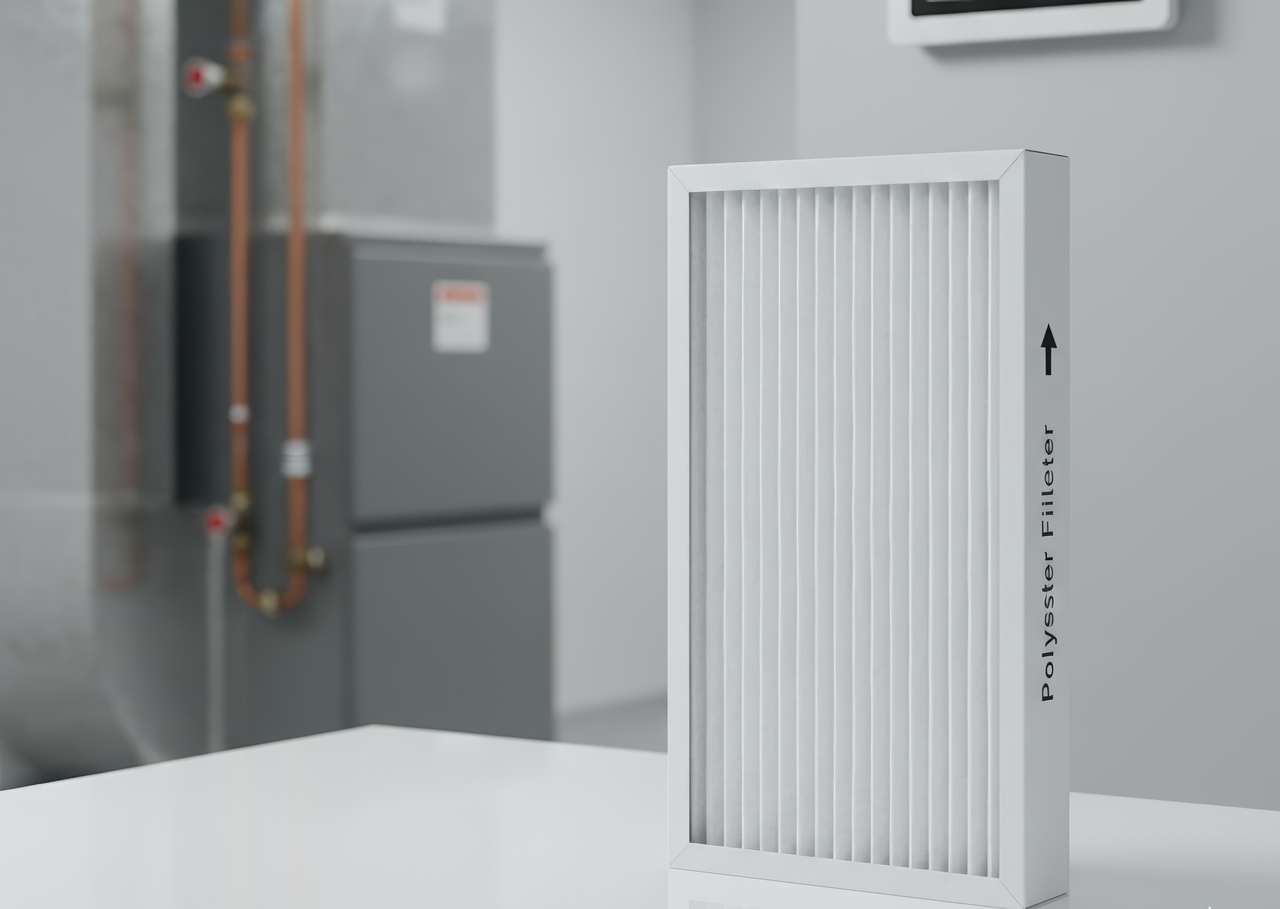
Most polyester filters are manufactured only in medium sizes, so they will not fit all Calgary furnaces.
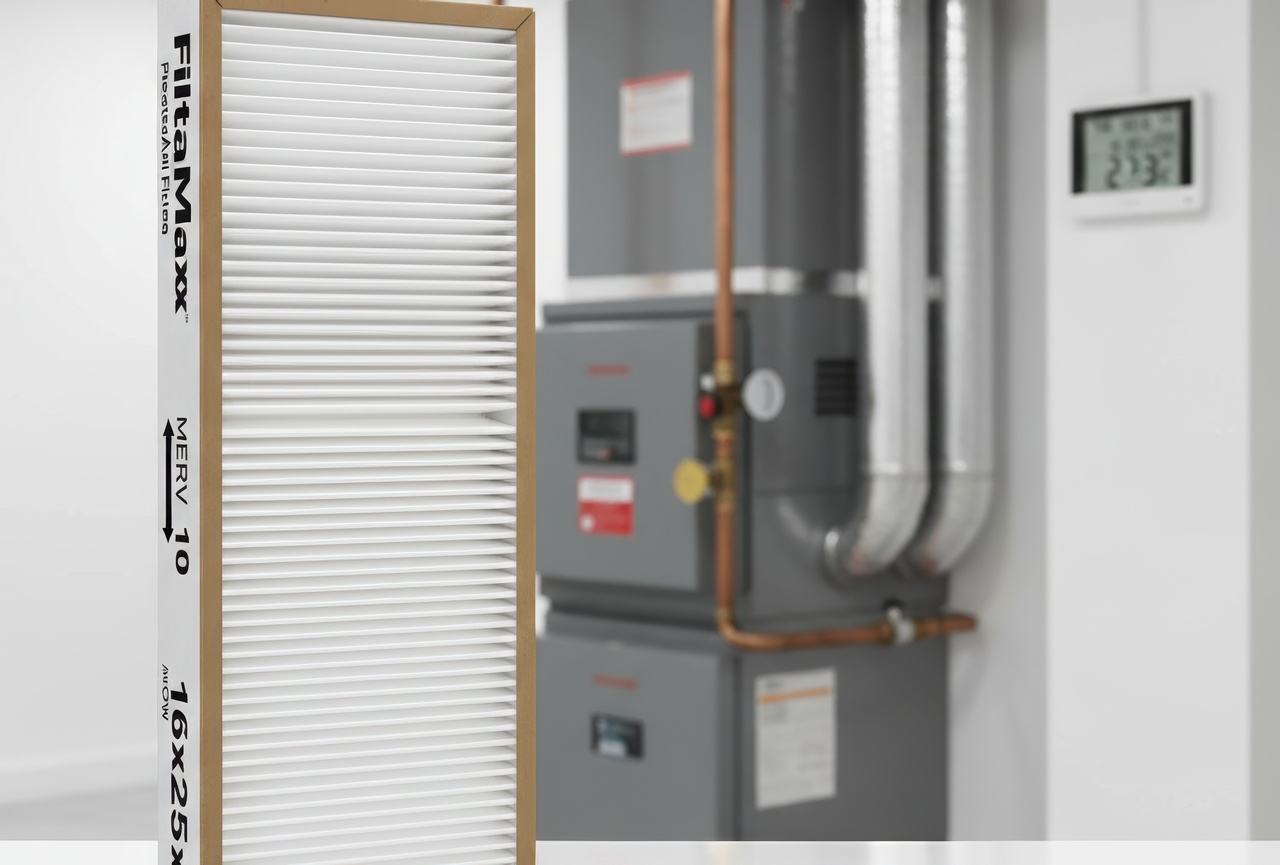
Pleated Filters
Furnace filters may be pleated to increase the surface area to trap particulate matter.
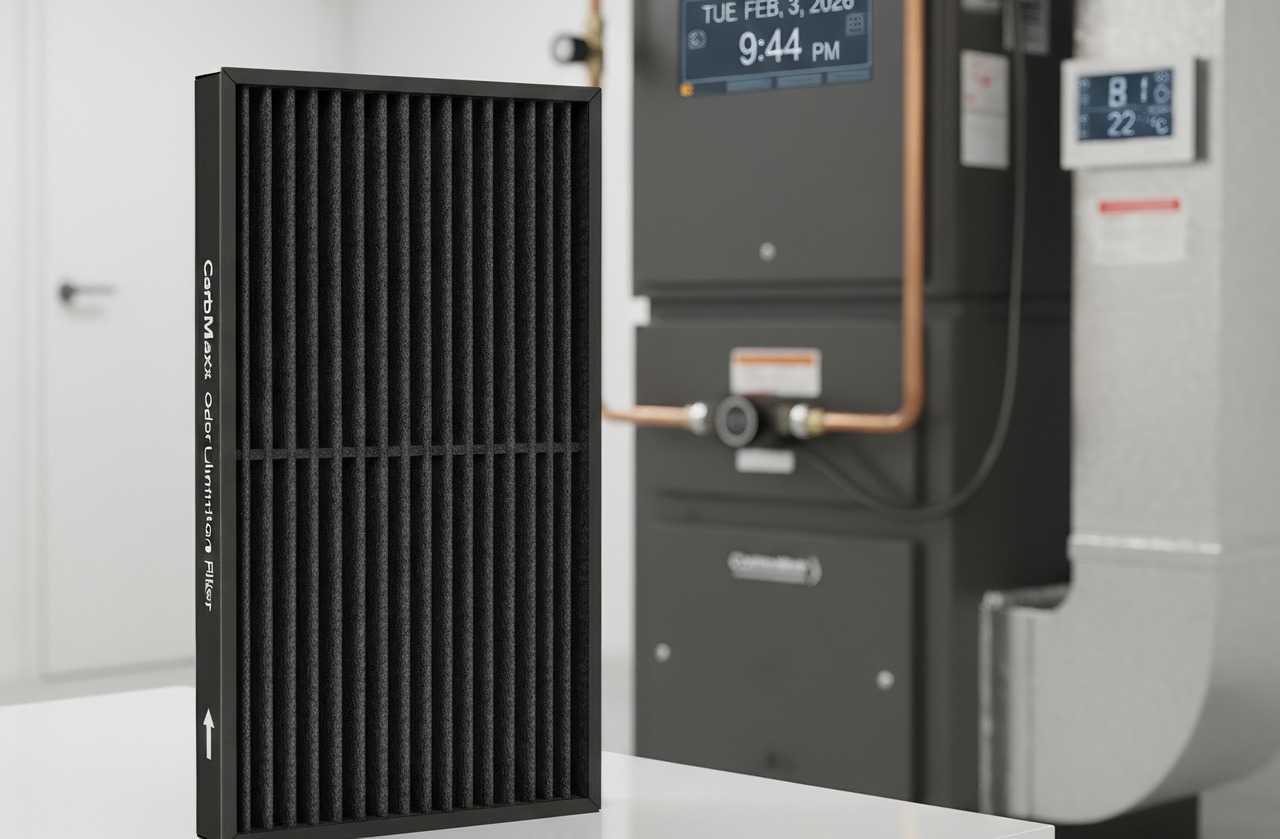
Carbon Filters
Carbon filters are primarily for controlling odors in homes, rather than for protecting the furnace.
HEPA Filters
HEPA filters are high-efficiency particulate air filters. They are rarely used in residential HVAC systems in Alberta because they are so dense that they can restrict airflow excessively—and potentially damage furnaces.
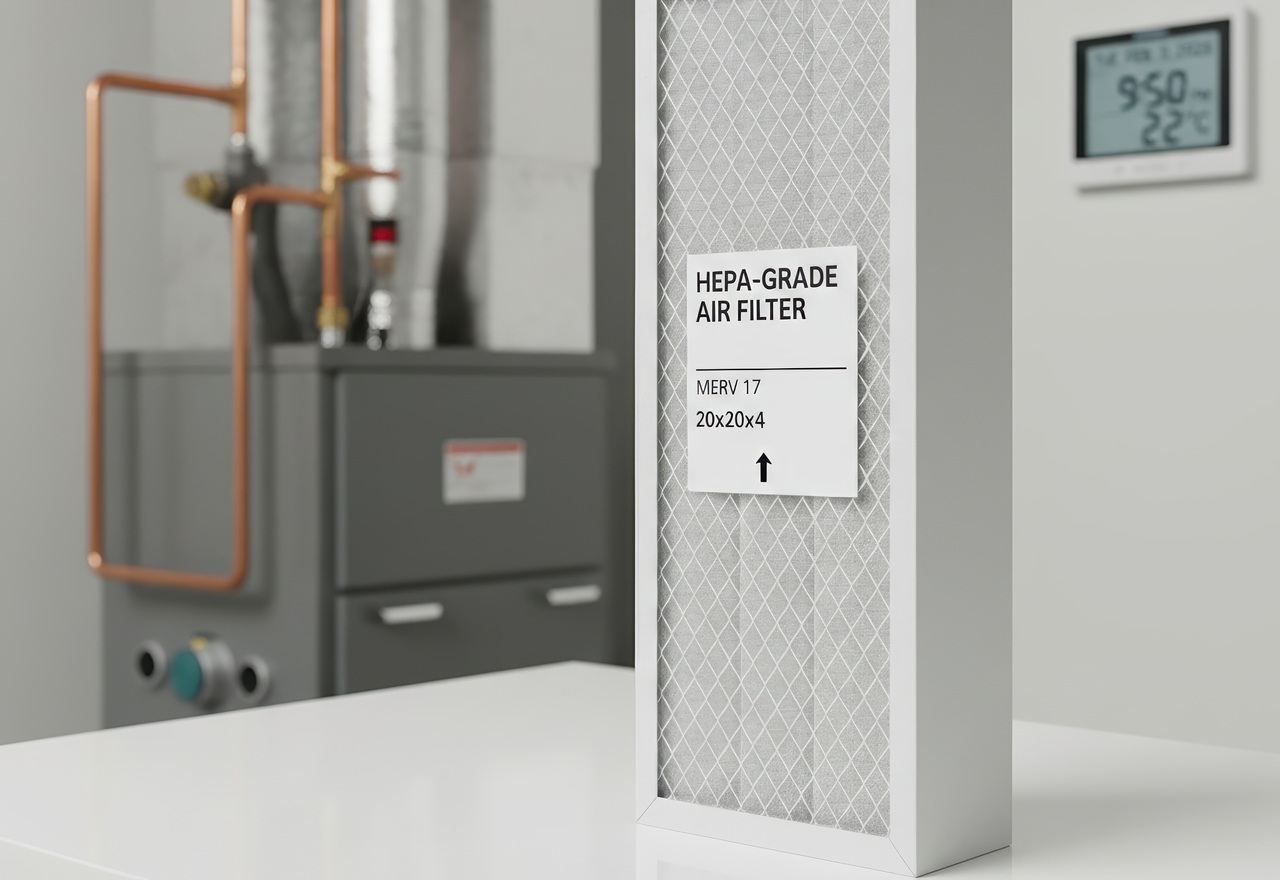
Most residential furnaces in Calgary cannot handle HEPA filters due to their excessive thickness.
When to Change Your Filter?
How often you need to change your furnace filter depends on filter type, the time of year, and home conditions.
As a rule of thumb:
During wildfire season in the summer, check your filter every two weeks (your AC will use the same filter in central HVAC systems). If the filter is grey or black from smoke, replace it immediately.
Failing to replace a filter can lead to furnace failure in the worst-case scenario.
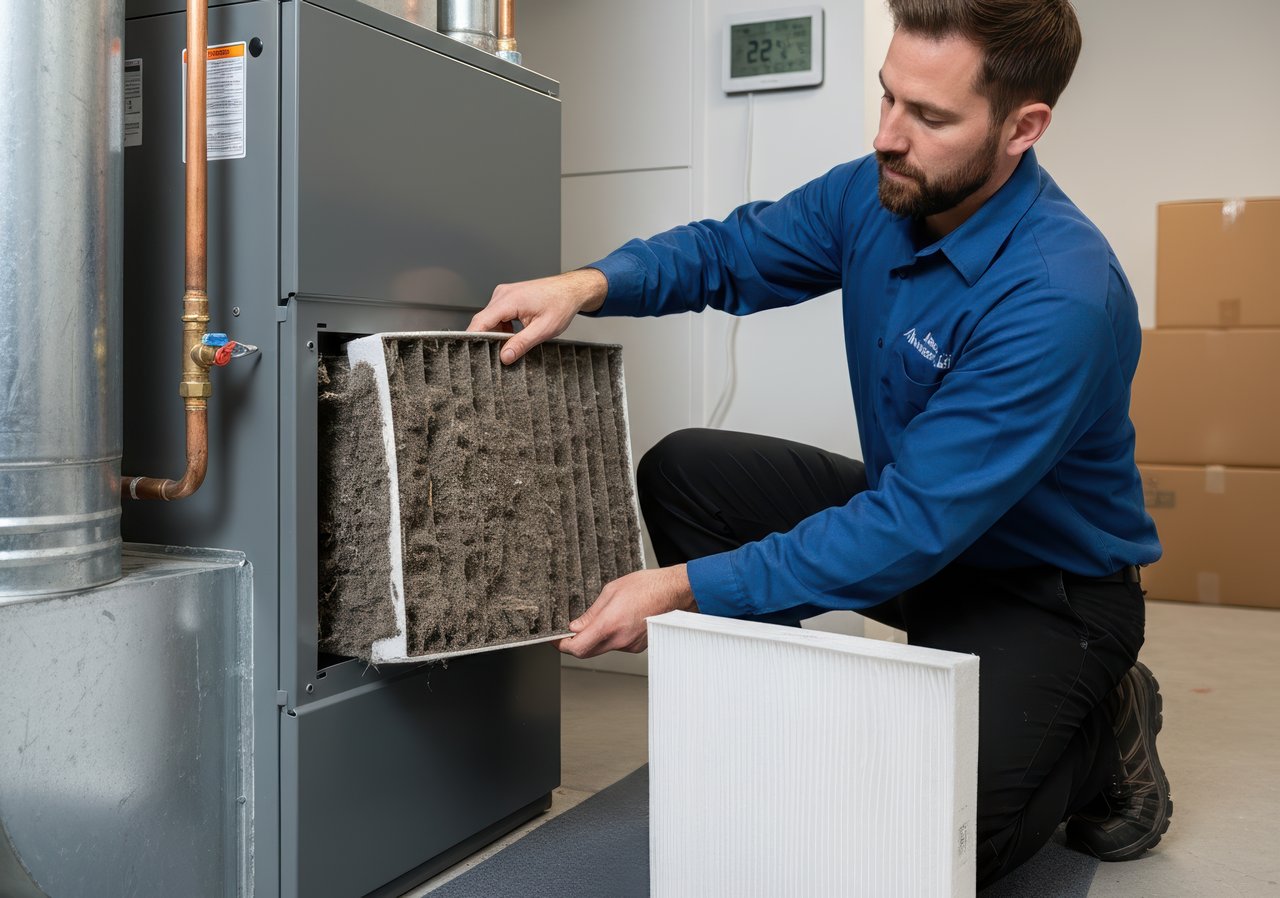
If your home is near a construction site, you’ve renovated recently, or you have pets or allergy sufferers in the household, you will likely need to change filters more often.
3 Common Mistakes When Choosing Furnace Filters in Alberta
If you make a mistake with your furnace filter, fix it quickly before it does any long-term damage to your furnace. Speak to a licensed HVAC pro if in doubt.
Once you’ve identified the correct size of filter, watch out for these common mistakes:
1. Cost-Cutting With Furnace Filters
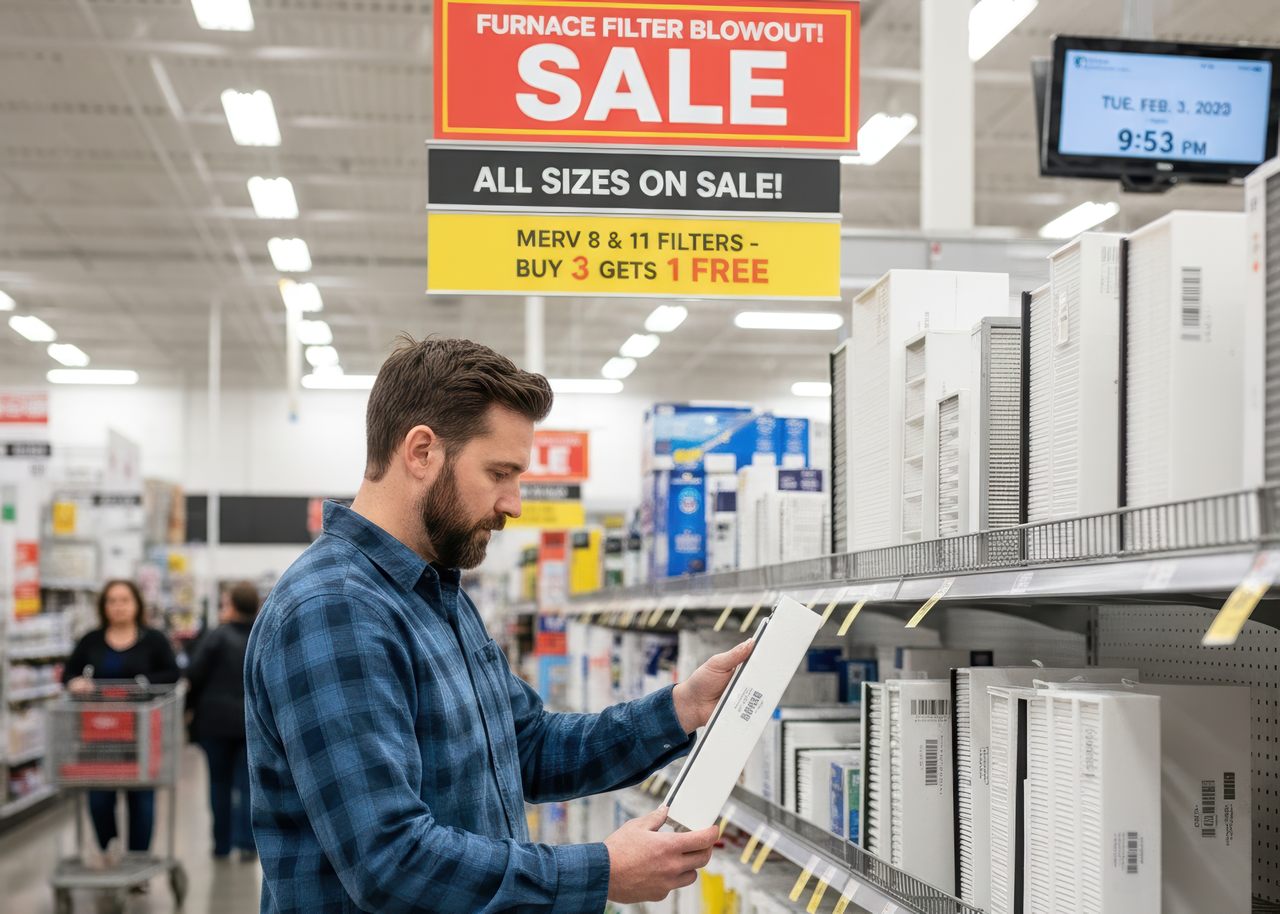
Keep away from unverified sellers that offer general household filters but don’t specialize in HVAC products.
A poorly fitting or low-quality filter won’t be up to the important jobs of preventing dust and allergens in the home, while also allowing adequate airflow through the furnace system.
2. Choosing an Overly High Merv Rating
Higher MERV filters are more efficient and trap more particulate matter but they can also restrict airflow if they are too powerful for your HVAC system. This reduces furnace efficiency and can even damage the furnace.
Most homes in Alberta should be able to get by with an 11-13-MERV filter even at the height of wildfire season, unless household members suffer from severe allergies.
3. Forgetting to Replace Filters
If you use one-inch-thick filters and only service your furnace annually, you will need to manually replace the furnace filter at least several times throughout the year.
Failure to do so can result in poor air quality, poor furnace performance, higher energy bills, expensive repairs, or even a shorter furnace life from the extra strain.
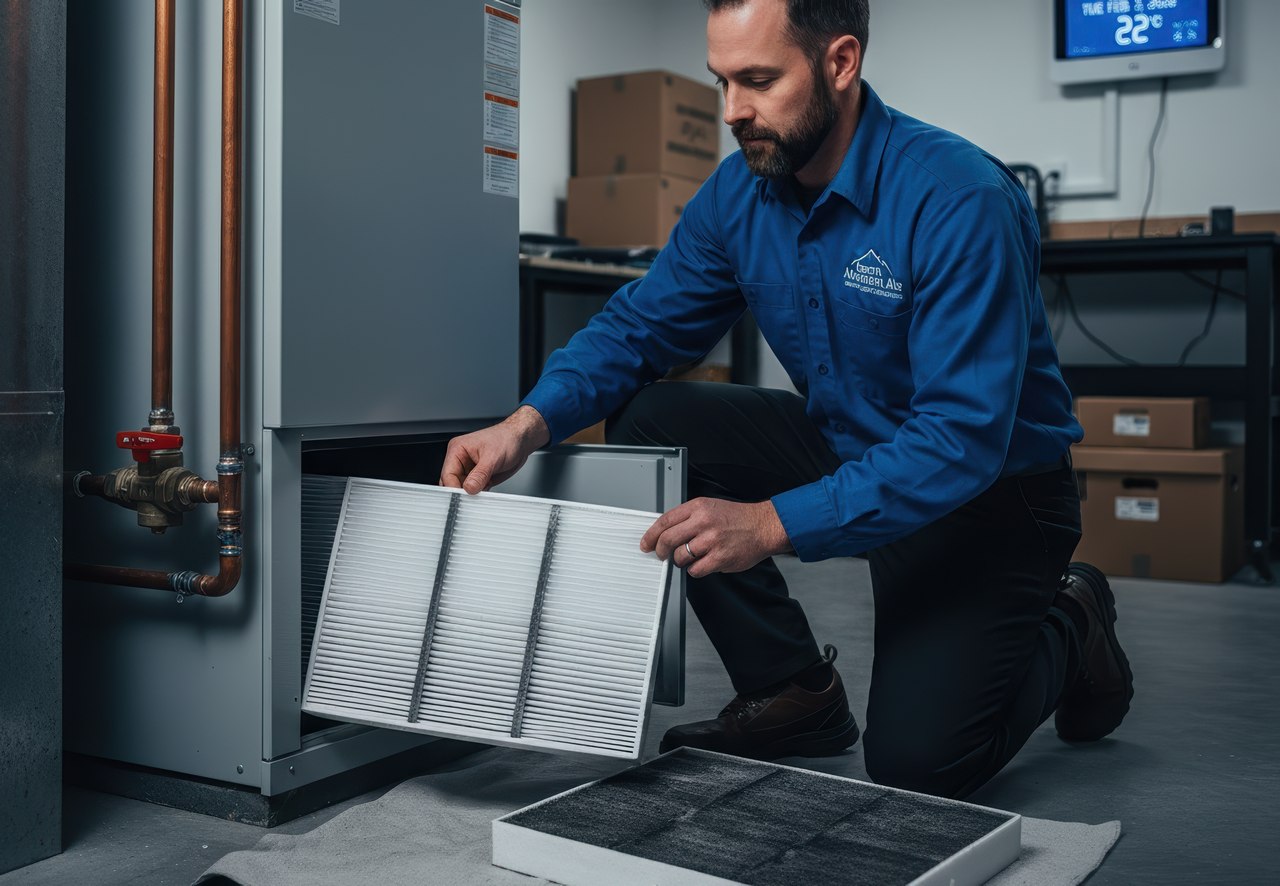
Make filter changes a priority and calendarize them so they are not forgotten.
FAQs
Keep your Furnace Working at Peak All Year
Furnace filters have different types, ratings, and sizes. By selecting the right filter and changing it regularly, you can improve air quality while also protecting your furnace’s performance and lifespan.
Changing filters must be part of an overall maintenance plan that performs essential checks, safety inspections, cleaning, lubrication, and calibration of parts.
All HVAC professionals at Alberta Mountain Air are SAIT-certified and can help you protect your heating and cooling equipment. If you’re in Calgary, contact us online to book a furnace tune-up.