.svg)
More than 75% of homes in the United States have an air conditioner. A reliable air conditioner can keep your home cool and comfortable throughout the summer. However, there may be times when your air conditioner isn’t cooling down your home as it should. These are the most likely reasons why your home is too hot.
THE AIR FILTERS ARE CLOGGED
The most common reason your air conditioner isn’t cooling your home is that the air filters are clogged. They are designed to collect dust, dirt, pollen, pet hair, and other air contaminants. They keep this debris away from your air conditioner’s coils and motors, which lowers the system’s efficiency. The filters also help keep the air inside your home clean. You can avoid this problem by regularly changing the air filter. Pull the filter out every month and inspect it. When it’s dirty, replace it with a new one. You should do this at least every three months and more often if you have pets. You should also change the air filter often if someone in your home has asthma or allergies.
LEAKY DUCTS
The ductwork in your home can be damaged by improper installation, rodents, or just regular wear and tear. In the average home, up to 30% of the cool air produced by your air conditioner is lost in the ductwork. This is another major reason your air conditioner isn’t cooling your home. You should inspect all the ductwork you can see. Seal any holes you find with tape, mastic, and insulation. You’ll need a professional to seal any holes in hidden-away areas of your home.
THERMOSTAT IS MALFUNCTIONING
A malfunctioning thermostat can be the cause of your AC system isn’t cooling your home. First, check its settings, including that it’s set to cool and not heat. If your thermostat uses batteries, the next step is to replace them. If you have a smart thermostat, it may need a hard reboot. Remove the thermostat from its power source, wait a few minutes, and then plug it back in. A common sign a smart thermostat needs a hard reboot is that its screen is frozen.
DIRTY OR BLOCKED REGISTERS
Registers can get dirty over time. You should clean them regularly to remove dirt, as it blocks cool air from entering your home. Remove the register and vacuum it. Vacuum as far into the ducts as you can reach. Make sure the registers are open when you put them back in place. Also, make sure the registers aren’t blocked. Furniture, drapes, and rugs can completely prevent cool air from reaching a room. If you have registers closed in little-used rooms, know that this will usually cost you money instead of saving it. The size of your AC was chosen to cool your entire home, not just part of it.
HEAT FROM THE SUN
Sunlight coming through windows can dramatically increase the temperature inside your home. Keep the drapes or blinds closed during the day in rooms where the sun shines through. Your thermostat being in the wrong place can also be a problem. The sun shouldn’t be shining directly on it. If it does, it can cause serious problems for your air conditioner.
LACK OF PROFESSIONAL MAINTENANCE
Many people don’t know they’re supposed to have their air conditioner tuned up by a professional every spring. Poor maintenance can lead directly to your air conditioner not cooling your home. The technician will thoroughly inspect your AC system to ensure everything is working as it should. Alberta Mountain Air Heating and Air Conditioning performs preventative maintenance. Based in Calgary, AB, our company has over 15 years of experience keeping homes cool and comfortable.
LOW REFRIGERANT
Air conditioners use refrigerant to move heat out of your home. When the refrigerant gets low in your air conditioner due to a leak, it will have a problem cooling your home. There are two reasons your air conditioner may be low on refrigerant. The first is that the technician undercharged it when installing it in your home. The second reason is that it has a leak. As the refrigerant is poisonous, you should call a professional right away if you suspect a leak.
DIRTY OR FROZEN EVAPORATOR COILS
Dirty evaporator coils can’t operate as efficiently as clean ones. Dirt can cause other problems as well, such as low indoor air quality. In addition, mold and mildew can build up. When you call our HVAC company for an AC tune-up, our technicians will clean the evaporator coils and other parts of your AC system. Evaporator coils can also become frozen and stop working. This can happen when there’s insufficient refrigerant or a lack of proper airflow. Another reason they freeze over is that there’s a blockage in the condensate drain line. Use a 1/4 cup of white vinegar to clear the blockage. You can also use a wet-dry vac.
UNDERSIZED AIR CONDITIONER
Your home may have an air conditioner that is undersized for it. An undersized air conditioner will run all the time but still can’t adequately cool your home. This is especially true of rooms far from the AC unit. The only way to address this issue is to have a new air conditioner installed.
CONDENSER UNIT PROBLEM
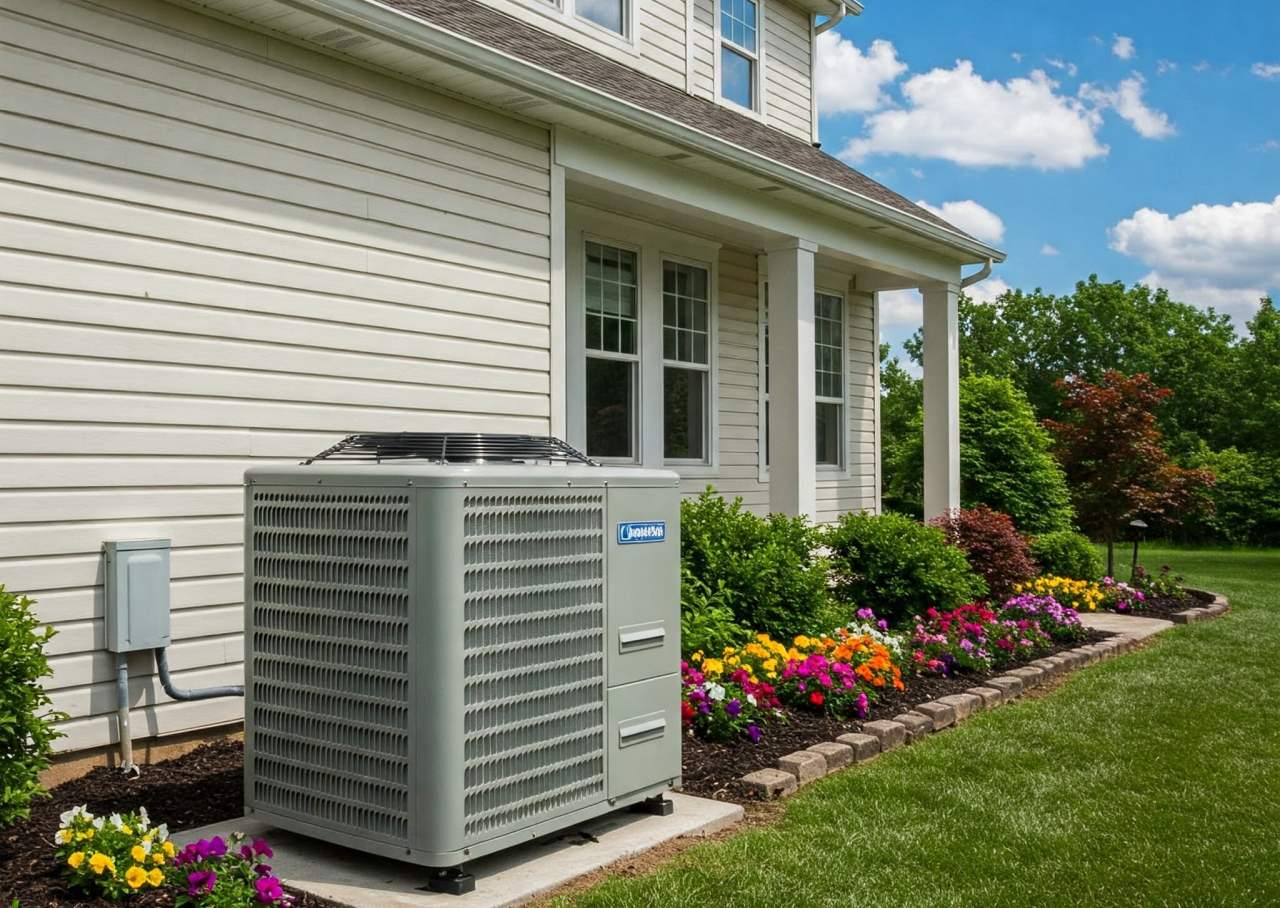
Your air conditioning system includes an outdoor condenser unit. It is usually placed on a concrete pad next to your home. It has a coil wrapped around it that has “fins” on it. The fins can become clogged, which reduces airflow to the condenser, causing it to inadequately cool your home. The fins can become clogged by dirt, grass, leaves, and other contaminants. These need to be clean for your AC system to cool your home and operate efficiently. A technician will clean them when performing AC maintenance. You can use a hose to clean the exterior of the outdoor AC unit. This will help prevent debris from getting into its exterior. Use a garden hose to gently wash away dirt and grime. Also, keep the surrounding area clean, such as by removing weeds, leaves, and other debris.
LACK OF POWER
If your air conditioner doesn’t turn on, it can’t cool your home. When it doesn’t turn on, check its circuit breaker to make sure it hasn’t been tripped. If it trips often, you should have a technician repair your AC system. Another thing to check is the disconnect box. This is a box on the side of your home that serves as a safety feature. Technicians use this box to cut the power to the outdoor condenser unit when working on it. If it’s been turned off, turn it back on. If you see burned or damaged wires, have a technician do repairs. Alberta Mountain Air Heating and Air Conditioning is the locally owned and operated HVAC company to call for the installation, repair, and maintenance of heaters and air conditioners in Calgary, AB. This includes heat pumps, furnaces, packaged systems, and mini-split systems. Our team can also help you with indoor air quality issues with air purifiers, UV lights, VRF/ERV systems, and ventilation. Additionally, we do conventional and tankless water heaters, basement suites, remodels, and new construction. Get in touch with us today to find out how Alberta Mountain Air Heating and Air Conditioning can help you.