.svg)
Do you wish your thermostat would know if your home needs cooling as you drive home from work in mid-July or could adjust the furnace system automatically for your preferred home temperature or energy usage patterns in mid-December?
Almost all (98%) of Alberta households have a thermostat. This is the highest rate in Canada. However, many are still using manual or basic programmable models, which are not the most energy efficient and could be wasting money every month.
More Calgary homeowners are making the switch to smart thermostats for the convenience, comfort control, energy efficiency, and long-term cost savings.
So, are smart thermostats worth the money and, if so, why—and how should you choose one for your home?
Are Smart Thermostats Worth the Money in Calgary?
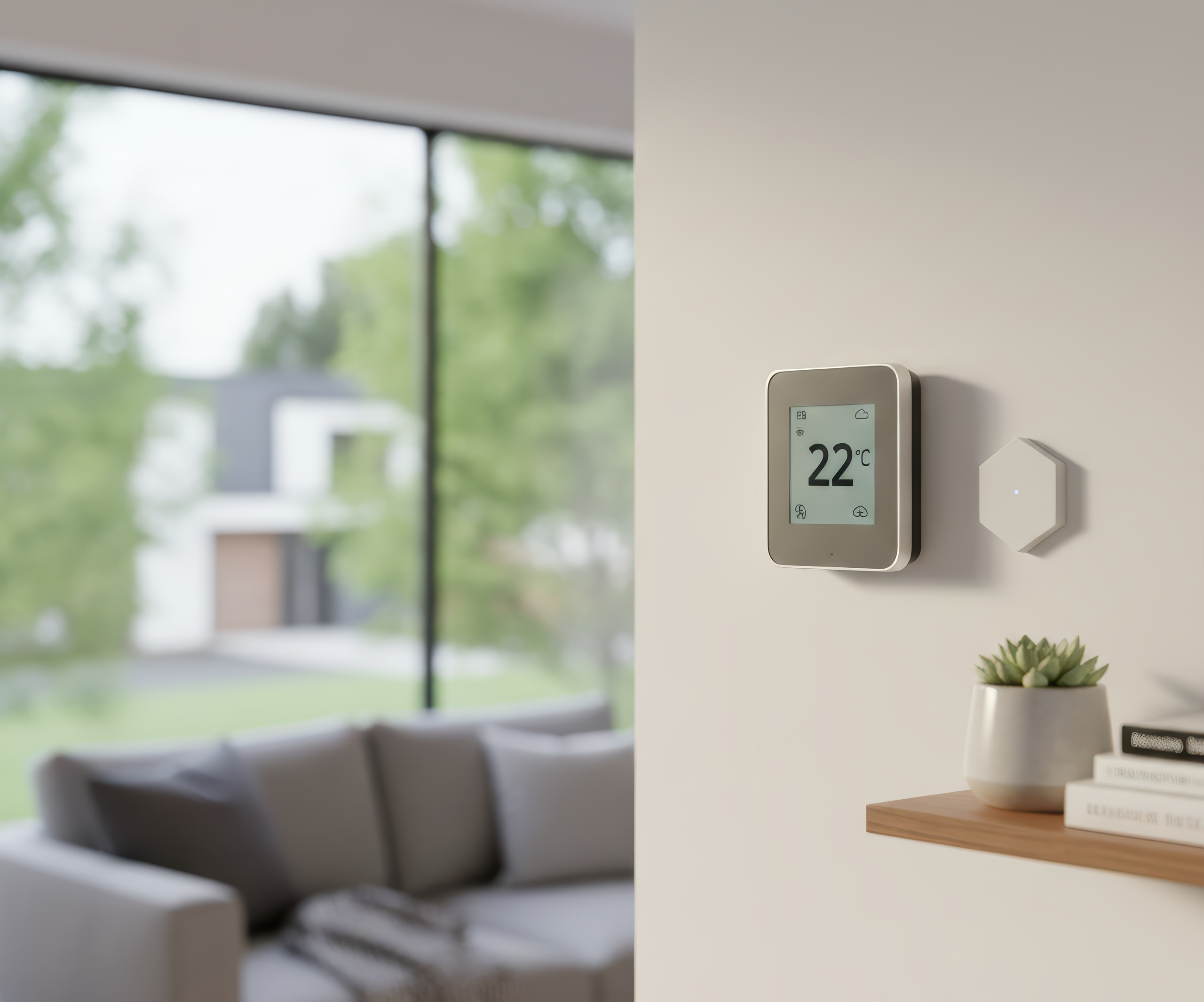
Smart thermostats can typically save 8-15% on heating and cooling costs for homeowners. These savings alone more than justify the relatively modest investment in a smart thermostat. The additional convenience and comfort make these devices more than worth it for most Calgary homes.
Let’s look closer at the pros and cons, the savings that can be made, and how to choose a smart thermostat for your home…
MAKE THE RIGHT HEATING & COOLING DECISIONS…
For over two decades, Alberta Mountain Air has helped Calgarians solve heating and cooling problems and maintain ideal comfort levels.Get in touch online_ for a quote._
What Is a Smart Thermostat?
The three types of thermostats available today are:
-
Traditional manual thermostats: Basic, non-digital devices that require homeowners to physically turn a dial or slide a lever every time the temperature needs changing.
-
Programmable thermostats: Digital controllers that allow homeowners to pre-set heating and cooling schedules for different times of the day/week.
-
Smart thermostat: Advanced, Wi-Fi-enabled devices that learn your habits, know when you’re away, allow for remote smartphone/tablet control, and automatically optimize energy savings based on occupants’ locations.
The biggest difference is that standard thermostats are wall-mounted units that must be manually adjusted to control the heating and cooling. Smart thermostats learn your ways, eliminate the need to keep making manual adjustments, and allow you to control the indoor air temperature from anywhere.
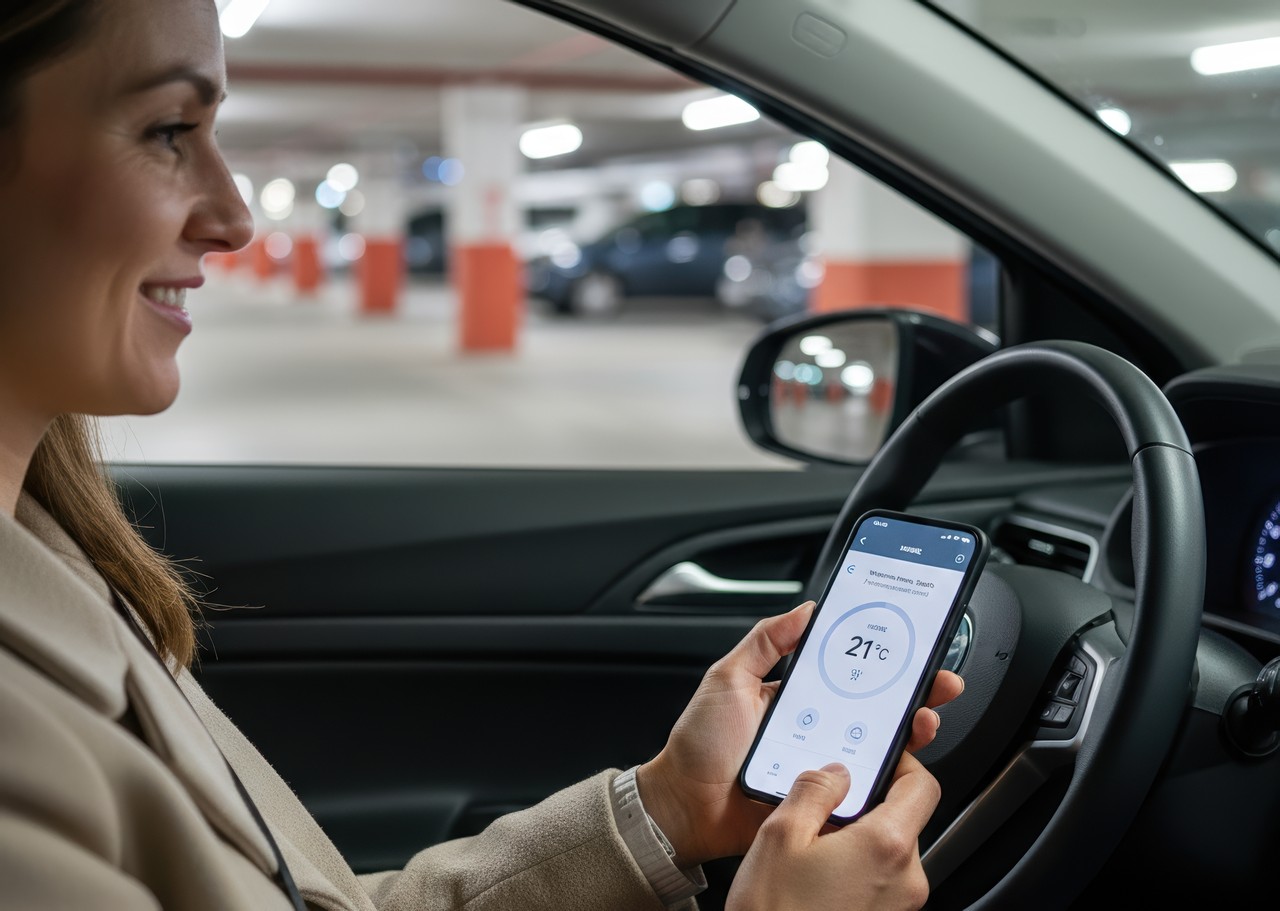
Smart thermostats can:
-
Save energy.
-
Save money.
-
Increase comfort levels.
-
Make home life more convenient.
They act like personal temperature assistants, allowing you to control energy usage with a simple device, which is increasingly attractive for homeowners facing rising energy prices.
Approximately 25% of Canadian homes currently use devices specifically for energy management, such as connected thermostats, but this number is expected to double by 2028.
How Much Money Can Smart Thermostats Save You?
In such an extreme climate as Calgary’s, HVAC charges are generally the biggest monthly energy contributor, accounting for up to two-thirds of average monthly utility costs in homes. So, even small percentage gains can save a lot of dollars.
-
Homeowners can save an average of 8-15% on heating and cooling costs by using certified smart thermostats (ENERGY STAR).
-
That totals up to a minimum of $50 per year in most North American households.
-
In Calgary, where such a large proportion of energy usage goes on HVAC, savings of $100-$250 per year are likely for most households, depending on energy usage habits.
-
It’s reasonable to expect that the savings can cover the purchase price of a new smart thermostat within 1-2 years.
-
The biggest savings are made by households upgrading from traditional manual thermostats to smart thermostats.

Why Do Smart Thermostats Save Money?
Smart thermostats primarily save homeowners money through automation and smart insights into how you use energy:
-
Intelligent energy usage: By learning the schedules, usage patterns, and preferences of households, smart thermostats gather the information they need to optimize heating/cooling and automatically adjust temperatures in different areas of the home.
-
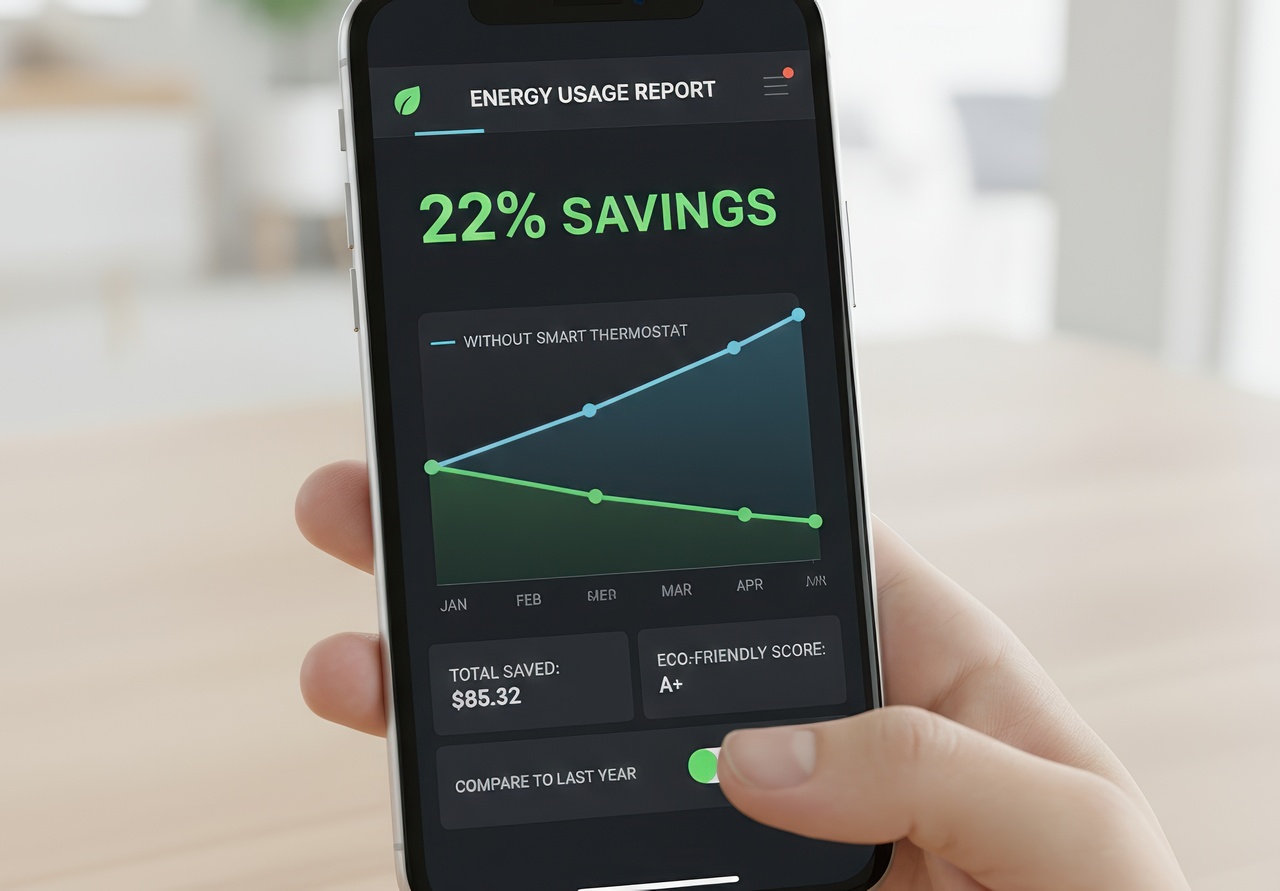
Energy insights: With the info gathered about energy usage patterns from your household and others, smart thermostats can provide updated energy reports and reminders to conserve energy if usage creeps above average.
-
AUTO HOME/AWAY feature: An ECO or AUTO HOME/AWAY feature saves money when you’re not home by automatically raising or lowering the temperature, depending on the time of year.
-
Remote control: Smartphone app control reduces the chances of heating or cooling “accidents”, such as forgetting to turn the heating off when you’re away for the weekend.
Smart Thermostat Usage Examples
Say that you manually turn the heat down to 18°C every Tuesday at 10:00 AM because you head to the gym. After a few days, the thermostat will just start doing it for you. You don’t have to program a complicated seven-day schedule. You just live your life, and it adapts, saving you money in the process.
If you are in your home office, you can tell the thermostat to ignore the temperature in the hallway and only focus on the sensor on your desk. This ensures you remain comfortable. However, unless you have a zoned system, the furnace will still need to heat the whole house to keep that one room warm.

Smart thermostats enable you to stay in control while handling the “heavy lifting”. If the automatic settings are not hitting the mark, simply open the app and adjust the settings manually. The thermostat will learn the new settings and can apply them next time.
What Do You Need for a Smart Thermostat to Work?
Most smart thermostats work great with modern central heating systems with forced-air gas furnaces, which is the setup in most Calgary homes.
The smart thermostat usually employs two main types of sensors to work properly:
-
Temperature sensors: to measure the room temperature and make necessary changes.
-
Passive Infrared (PIR) motion or occupancy sensors: to understand which parts of the home are occupied.
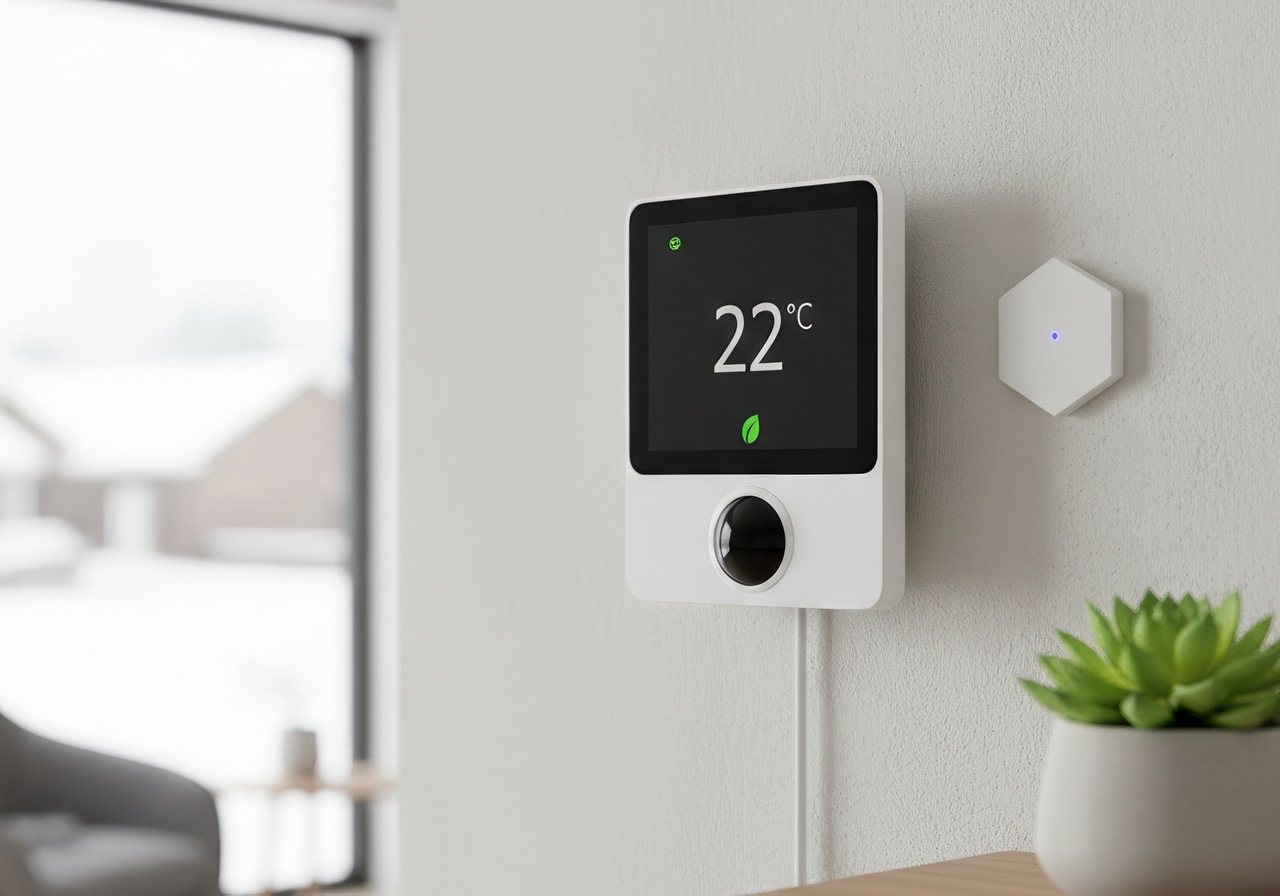
To function properly, a smart thermostat also needs:
-
A constant power source (C-Wire): Smart thermostats cannot simply use batteries. They need constant power for their Wi-Fi and touchscreens, usually provided by a “C” (Common) wire. Older Calgary homes may need a C-wire adapter or a professional to pull new wiring.
-
Reliable home Wi-Fi: A 2.4GHz or 5GHz wireless network to communicate with your phone and receive local Alberta weather updates.
-
A smartphone or tablet, loaded with the manufacturer’s app (such as Nest or Honeywell Home).
-
HVAC system compatibility with low-voltage (24V) controls.
-
A manufacturer account to store your preferences, view energy reports, and enable “geofencing” (which uses your phone’s GPS to tell the thermostat when you’re heading home).
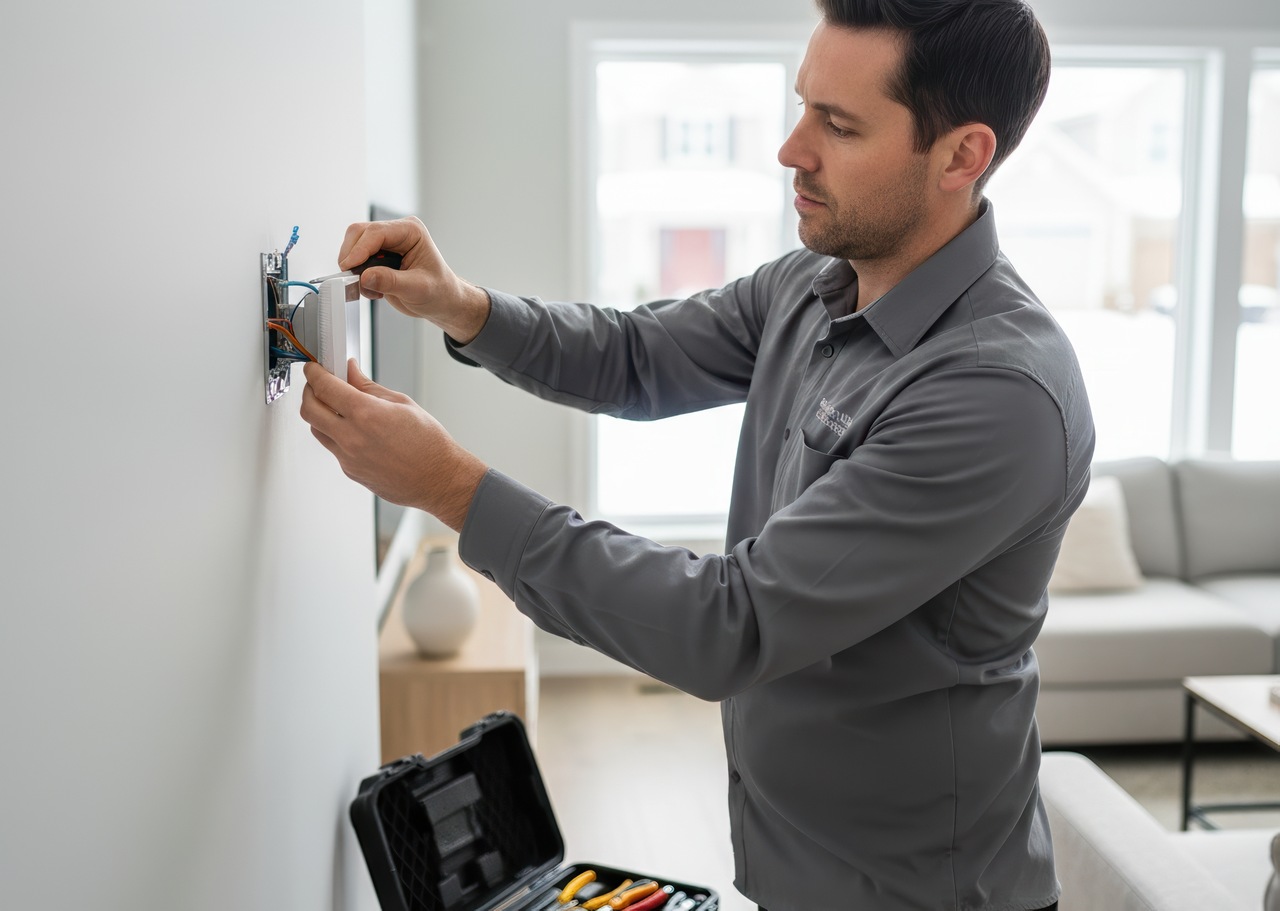
Most smart thermostats require professional installation. The thermostat should be placed on an interior wall, away from direct sunlight, drafty windows, or air vents that could “trick” the sensors.
How Much are Smart Thermostats?
In Calgary, smart thermostats cost from anywhere between $130 and $400 or more, depending on:
-
Brand/model.
-
Finishes/materials used.
-
Advanced feature support, e.g., AI-learning.
-
Sensor quality.
In addition to the price of the thermostat, extra installation costs will apply if your home is not set up for smart devices. Expect to pay an additional $150-$250 to a licensed HVAC technician for this.
Can I Claim an Energy Rebate for Switching to a Smart Thermostat?
The Canada Greener Homes grant program has closed. It previously provided a $50 rebate for some ENERGY STAR®-certified smart thermostat installations.
Check this post for available programs but also ask your energy provider or HVAC professional if any new federal or provincial incentives are available.
The monthly savings from reduced energy usage should justify the upfront costs. Some Alberta utilities also offer “demand response” programs where homeowners get annual credits (often $20–$75) for allowing the utility to make minor, automated temperature adjustments during peak energy demand periods.
Pros and Cons of Smart Thermostats
Smart thermostats are a breakthrough for many homeowners—but they’re not for everyone.
Pros of Smart Thermostats
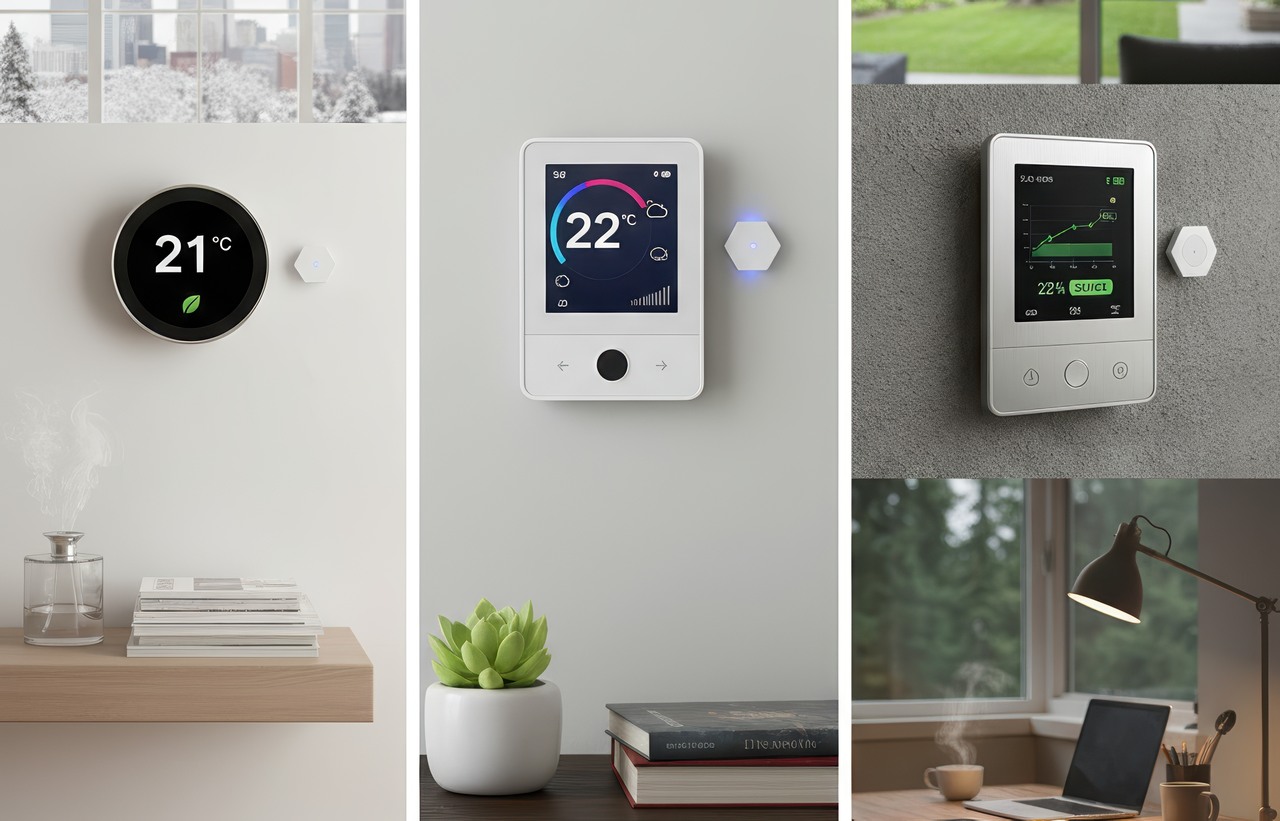
The following benefits make smart thermostats worth it for most homeowners:
-
Energy savings and reduced monthly bills: Smart thermostats can save homeowners 8% to 15% on heating and cooling costs, e.g., the thermostat knows when you’ve left the house from your phone’s GPS and enters “Eco Mode” automatically.
-
Remote control of indoor temperatures: Control the temperature settings conveniently from a smartphone app.
-
Home comfort without the hassle: The thermostat knows it takes 40 minutes to warm your house from 17°C to 21°C, so it starts early enough that it’s warm when you wake up.
-
Frost protection: It ensures your pipes don’t freeze if you’re away on vacation and the temperature drops to -30°C (some insurance policies reward this with lower premiums).
-
Energy insights: You can access useful data about energy usage in the home, with trends and patterns that can help you make smarter decisions to save money and reduce waste.
-
Greater per-room control: Smart thermostats have sensors for different rooms, enabling you to instruct the thermostat to base its actions on a certain room’s temperature.
Cons of Smart Thermostats
It’s difficult to find many negatives about upgrading to a smart thermostat in Calgary, but here are a few possible cons:
-
High initial cost: It may take 1-2 years before the energy savings pay back the initial investment in a smart thermostat.
-
Installation cost/hassles: Some smart thermostats can be installed relatively easily but most need professional installation and, depending on the existing electrical setup, may require additional wiring.
-
Learning curve: Homeowners may need to learn how to optimize their use of smart thermostats, which can take a little time. Your HVAC professional can provide a demo after installation.
How to Choose a Smart Thermostat
Looking to purchase a smart thermostat and wondering where to start?
-
Think about the features you need: For instance, a thermostat that helps control humidity is only useful with a whole-home humidity system; if you have allergy sufferers in the home, you may need to ensure the device can integrate with your indoor air quality measures. Choose a device that aligns with your HVAC setup and lifestyle, and seek professional advice beforehand if need be.
-
User-friendliness: Homeowners with a lack of technical know-how may be more comfortable purchasing easy-to-use devices with a low learning curve.
-
Consider efficiency: ENERGY STAR®-certified devices will keep your bills as low as possible.
-
Think about brand and budget: Most smart thermostats do not cost a great deal. With the potential energy savings, it’s best to settle on a budget for a respected brand-name device, like Nest, Honeywell, or ecobee.
FAQs
Do You Always Have to Control a Smart Thermostat with a Smartphone?
No, you can manually adjust the thermostat via the touch-based interface on the device itself, like a traditional thermostat. However, one of the main benefits of smart thermostats is the ability to control the HVAC system remotely from a smartphone app.
Are Smart Thermostats Compatible with All HVAC Systems in Canada?
Smart thermostats are compatible with most, but not all, modern heating and cooling systems, such as central HVAC, furnaces, heat pumps, air conditioners, etc. Older HVAC systems may not be compatible.
What Happens If a Smart Thermostat Fails?
A total hardware failure requires a professional fix but 99% of smart thermostats have physical touchscreens or buttons that allow manual temperature adjustment even if the Wi-Fi goes out.
Are Smart Thermostats Right for Every Calgary Home?
Most Calgary homes can benefit from smart thermostats, especially for managing ‘Chinook’ temperature swings and preventing frozen pipes, but they’re not compatible with every home. Homeowners in older neighborhoods should verify they have a C-wire or a compatible low-voltage system before buying. Consult a professional if need be.
Can Smart Thermostats Help with Humidity and Indoor Air Quality?
In Calgary, our bone-dry winters and humid summers can create challenges for homeowners. Most smart thermostats have a built-in hygrometer to measure humidity, and high-end models can integrate with a whole-home humidifier to help control humidity levels.
Can I Use My Smart Thermostat to Set Reminders?
Most major brands allow you to set “service” reminders, helping you keep your furnace warranty valid and more. Reminders to change the filter, change the humidifier water panel/pad, and change UV bulbs or HRV filters in air purifiers are available in the best models. Smart thermostats can also act as the “brain” of your air quality system, with built-in air quality sensors and recommendations for improvements.
Professional Smart Thermostat Installation in Calgary
Get a trusted HVAC professional to install your smart thermostat so that you don’t run into unexpected problems with wiring/adapter installation or void any applicable warranties.
All HVAC professionals at Alberta Mountain Air are SAIT-certified and can help you make the right heating and cooling decisions. So, if you’re in Calgary and looking to upgrade to a smart thermostat or have any other pressing HVAC requirements, contact us online.